

Blog
Best Channel Letter Material: A Complete Guide for Sign Shops & Fabricators
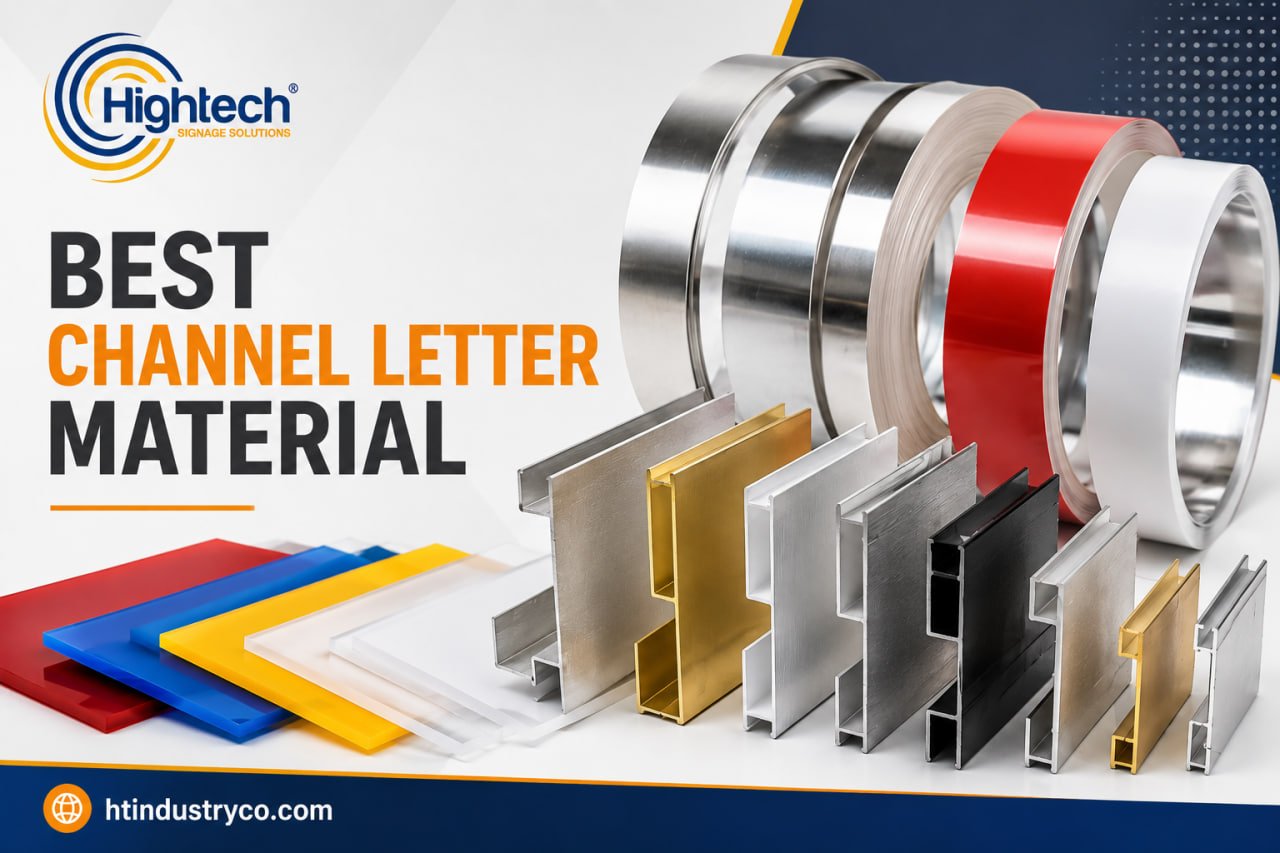
Table of Contents
If you build channel letters for a living, “what is the best channel letter material” is really three questions in one: what to use for the return, what to use for the face, and how that choice runs through your fabrication line. Most guides are written by sign shops selling finished signs. This one is written from the manufacturing side — where the coil meets the bender — so the material recommendations connect directly to how letters are actually formed.
Quick Answer: What Is the Best Channel Letter Material?
There is no single “best” material — there is a best material for each part of the letter. For the return and back, aluminum coil wins for the vast majority of signs. For the face, acrylic is best when the letter is illuminated. When you need maximum outdoor durability or a high-end metal look, stainless steel returns are the upgrade. Halo-lit letters call for an opaque metal face. The sections below break down each part, then show how to choose based on your environment, lighting, and production setup.
Best Materials for Channel Letter Returns & Backs
Aluminum (Coil/Sheet) — The Industry Standard
Aluminum coil is the default return material, and for good reason: it is light, it will not rust, it bends to tight letter radii without cracking, and it accepts paint and coatings cleanly. Hightech stocks return-ready aluminum in several formats, including the Single Edge Aluminum Coil, Sidelight Single Edge Aluminum Coil, Flat Aluminum Coils (Plain), and Flat Aluminum Coils Side Light. For manual or hand-formed work there are also Aluminum Hand Use Coils.
Stainless Steel — Premium & High-End Looks
When a project demands the brightest finish or the highest corrosion resistance — coastal sites, flagship storefronts — stainless steel is the premium return material. Hightech carries Stainless Steel Coils 304 series for maximum durability, and Stainless Steel Coils 201 series for a stainless look at a lower cost. Stainless is heavier and harder to form than aluminum, so it pairs best with a higher-torque automated bender.
Galvanized / Other Metals
Some shops still hand-form steel returns where a heavier-gauge metal is specified. For that workflow Hightech offers Steel Hand Use Coils and Side Light Hand Use Coils. Steel must be coated to prevent rust, so for most outdoor signs aluminum or stainless remains the better long-term choice.
Best Materials for Channel Letter Faces
Acrylic — Best for Illuminated Letters
Polycarbonate — Best for Impact Resistance
Metal Faces — Opaque & Halo (Reverse) Letters
For halo-lit (reverse) letters, the face is opaque metal so light glows around the letter against the wall. Aluminum and stainless coil both serve as metal faces. Dimensional and 3D letters can also use formable components such as 3D High Polymer ABS Strips, and pre-assembled channel letter with sponge and PVC components streamline certain sidelight builds.
Finishing & Overlay Materials
Trim Cap
Trim cap locks the face to the return and gives the letter its finished edge. Hightech supplies Aluminum Plastic Trim Caps (Arrow Type) and Aluminum Plastic Trim Caps (J Type), plus a Trim Cap Profile and a Trimless Profile for shops that want a seamless, capless edge.
Return & Edge Profiles
Profile components keep returns consistent and speed assembly. Useful items include the Return Bar Profile and the Arrow Profile, which work alongside the trim cap system above.
Paint & Coatings (UV Protection)
Whatever metal you choose, a UV-stable paint or powder coating protects color and finish against years of sun and weather. Coating is especially important on steel returns, which must be sealed against rust, and it lets aluminum returns match any brand color.
How to Choose the Best Channel Letter Material
Choosing the best channel letter material depends on the sign type, installation environment, lighting method, and fabrication process. For most projects, aluminum is the best material for returns and backs because it is lightweight, corrosion-resistant, easy to bend, and cost-effective for channel letter production. For illuminated channel letters, acrylic is usually the preferred face material because it provides smooth light diffusion and a clean, professional appearance.
However, the right choice is not always the same for every project. Outdoor signs need strong weather resistance, coastal locations may require stainless steel, and high-traffic areas may benefit from polycarbonate because of its impact resistance. If you are deciding how to choose rendering sheet for channel letters and lightboxes, focus on light transmission, UV resistance, thickness, color stability, and compatibility with your bending and assembly process.
The best material should balance durability, appearance, cost, weight, and ease of fabrication. By matching the material to the sign’s lighting style, location, and production requirements, sign makers can reduce waste, improve quality, and extend the lifespan of the finished sign.
Indoor vs. Outdoor & Weather Durability
Illuminated vs. Non-Illuminated
Cost, Weight & Ease of Fabrication
Aluminum is the easiest to form and the lightest to ship and mount, which keeps both labor and freight down. Stainless costs more and is harder to bend but lasts longest in harsh conditions. Match the material to the job rather than defaulting to the cheapest coil.
Aluminum Thickness / Gauge for Bending
Return material is typically thin-gauge coil so it bends to tight radii while holding its shape. The exact gauge you can run depends on your machine — review the model specs across the Hightech channel letter bending machine range (HT1, HT3, HT6, HT PRO, and HTZ5) so your coil choice and bend parameters line up for a clean, repeatable letter.
How to Choose Rendering Sheet for Channel Letters and Lightboxes
If you are wondering how to choose rendering sheet for channel letters and lightboxes, the right answer depends on the sign type, lighting method, outdoor conditions, and the material’s ability to diffuse or block light properly. A good rendering sheet should not only look clean from the front, but also work well with the return material, LED system, bending process, and final installation environment.
For channel letters and lightboxes, the wrong sheet choice can cause uneven lighting, weak color output, cracking, yellowing, poor weather resistance, or a less professional finish. That is why sign makers should evaluate the sheet material before production, not after installation.
Choose the Right Material
The first step is choosing a sheet material that matches the visual and functional requirements of the sign. Acrylic is usually the best choice for illuminated channel letter faces because it provides smooth light diffusion, strong color options, and a clean front-lit appearance. It works well with aluminum returns and is easy to cut into custom letter shapes.
Polycarbonate is a better option when impact resistance is more important. It is useful for low-mounted signs, public areas, transportation environments, or locations where the sign may face physical damage. While it can cost more than acrylic, it offers stronger protection against cracking.
For halo-lit or reverse-lit channel letters, an opaque metal face such as aluminum or stainless steel is usually the better choice. In this type of sign, the light is not meant to pass through the face. Instead, it reflects from the back and creates a glow around the letter. For this reason, the sheet must block front light and create a clean premium appearance.
Match the Sheet to Your Sign Type
Different sign types require different sheet performance. For front-lit channel letters, the sheet should allow even light transmission and avoid visible LED spots. Acrylic or polycarbonate faces are usually the best options because they create a bright and balanced illuminated effect.
For lightboxes, the sheet must provide wider light diffusion across a larger surface. If the sheet is too thin, too transparent, or poorly matched with the LED spacing, the final result may show hot spots or uneven brightness. A high-quality acrylic or polycarbonate sheet with proper thickness and diffusion quality helps create a smoother lightbox appearance.
For halo-lit letters, the sheet should be opaque and durable. Aluminum and stainless steel are common options because they create a strong metal finish and allow the light to glow from behind the letter. For non-illuminated signs, the choice can focus more on appearance, durability, coating quality, and ease of fabrication.
Check Performance Before Buying
Before buying rendering sheets for channel letters or lightboxes, check how the material performs in real production conditions. Important factors include light diffusion, UV resistance, thickness consistency, color stability, cutting quality, and compatibility with your fabrication process.
For outdoor signs, weather resistance is essential. The sheet should resist yellowing, fading, cracking, and deformation under sunlight, rain, humidity, and temperature changes. For illuminated signs, test the sheet with the actual LED setup to make sure the brightness is even and the color looks correct.
Also consider how the sheet works with the rest of the sign structure. The face material should fit properly with trim cap, return profiles, aluminum coils, stainless steel coils, and the channel letter bending process. A sheet that looks good but creates assembly problems can increase labor time, waste material, and reduce final sign quality.
The best choice is not always the cheapest sheet. A reliable rendering sheet should improve the final appearance, support long-term durability, and reduce production issues for both channel letters and lightboxes.
Material Comparison Table (Pros, Cons & Best Use)
Material | Part Used For | Pros | Cons |
|---|---|---|---|
Aluminum coil | Returns & backs | Lightweight, corrosion-resistant, bends cleanly, weldable, paint-ready | Softer than steel; premium finishes need coating |
Stainless steel coil (304) | Returns (premium/outdoor) | Maximum corrosion resistance, bright finish, durable in coastal/harsh climates | Heavier, harder to bend, higher cost |
Stainless steel coil (201) | Returns (decorative) | Stainless look at lower cost than 304 | Less corrosion-resistant than 304; not ideal for marine air |
Acrylic (face) | Illuminated faces | Excellent light diffusion, color range, weather-stable, easy to fabricate | Can crack under hard impact |
Polycarbonate (face) | Impact-prone faces | Very high impact resistance, good for vandal-prone/low installs | Pricier; can yellow over years without UV grade |
Metal face (aluminum/steel) | Halo / reverse-lit faces | Premium opaque look, durable, ideal for back-lit halo letters | No front illumination; needs precise fabrication |
Trim cap | Face-to-return edge | Locks face to return, clean finished edge, retains acrylic | Adds a fabrication step; color must be matched |
Find the Right Machine for Your Application
Frequently Asked Questions
What is the best material for channel letters?
What is the best material for channel letter faces?
Why is aluminum the most common channel letter material?
What is the best material for channel letter returns?
Which material is best for illuminated (LED) channel letters?
What material is best for outdoor channel letters and durability?
What material is best for halo / reverse channel letters?
Latest contents