

Blog
CNC Routers for Cabinetry: Efficiency & Machine Selection
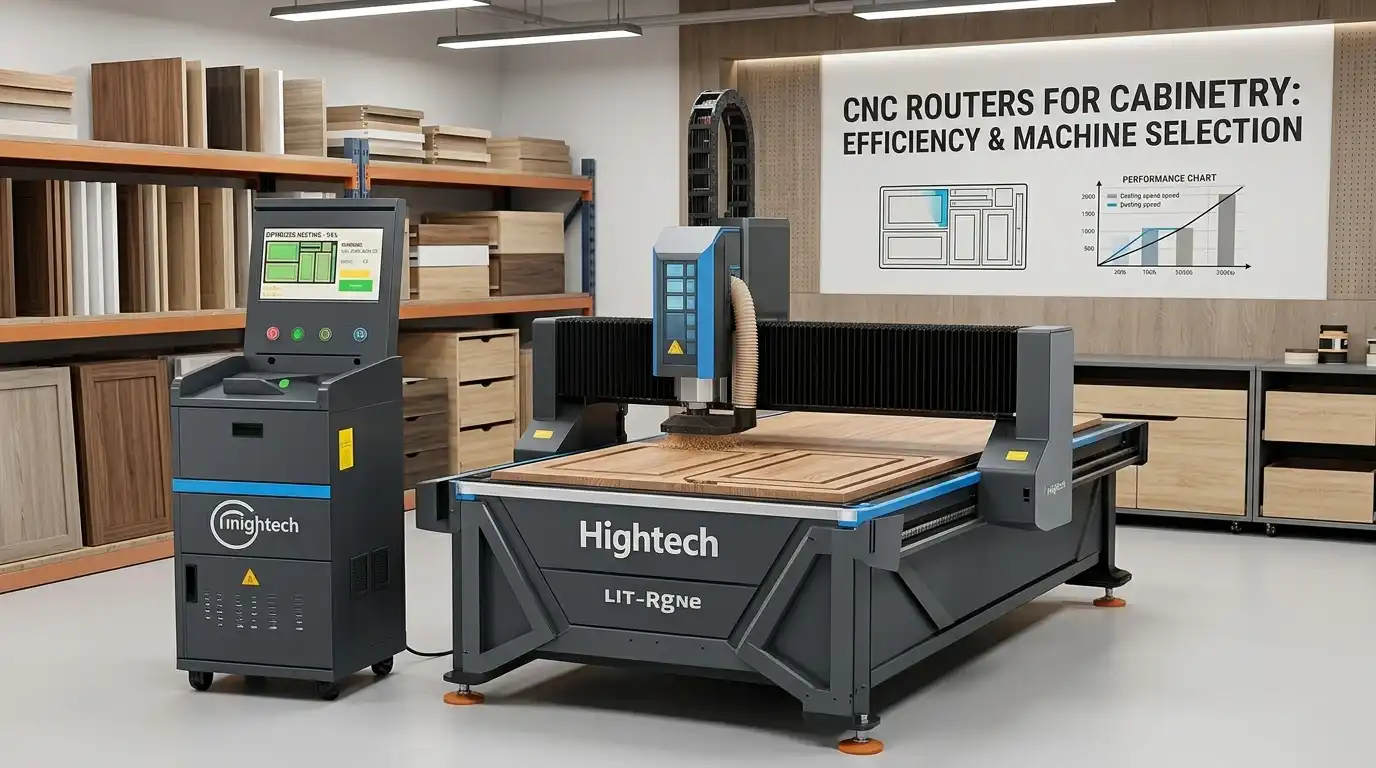
Table of Contents
In modern woodworking, the shift from traditional, hands-on fabrication to automated systems is no longer a luxury—it is a competitive necessity. CNC routers for cabinetry have fundamentally redefined how professional workshops design, cut, drill, and assemble modular furniture. By integrating computer-aided design (CAD) and computer-aided manufacturing (CAM) software with high-precision machinery, cabinet makers can eliminate human error, optimize material utilization, and dramatically accelerate throughput.
Whether your business focuses on bespoke, highly customized kitchen islands or high-volume architectural casework, adopting CNC woodworking automation for cabinetry production ensures consistent tolerances within fractions of a millimeter. This structural shift allows businesses to scale their output while maintaining a lean workforce, directly converting operational floor space into a high-yield profit center.
Which CNC Router Is Best for Cabinet Making?
Selecting the ideal machinery depends heavily on your daily production volume, material thickness, and shop footprint. The following breakdown highlights how automation alters traditional workflows, followed by specific technical recommendations based on operational scale.
Production Stage | Traditional Method | CNC Wood Router Method | Efficiency Impact
|
|---|---|---|---|
Design & Layout | Manual drafting & cut-lists | CAD/CAM + nesting software | Higher accuracy & speed; instant revisions |
Cutting | Table saws / panel saws | Automated CNC nesting | Reduced errors, optimized yield, no kickbacks |
Drilling | Manual drill press / line borers | CNC automated multi-axis drilling | Flawless alignment for dowels, hinges, & pins |
Assembly Prep | Hand measurement & sanding | Digitally matched, pre-buffered parts | Faster assembly; predictable joinery |
- For Small Workshops & Custom Shops: A compact, highly rigid 3-axis system with a vacuum table handles sheet goods effectively without monopolizing floor space. It handles variable, low-volume custom work flawlessly.
- For Mid-Sized Growing Businesses: A heavy-duty system equipped with an Automatic Tool Changer (ATC) and linear guides minimizes manual setup, smoothly bridging the gap between bespoke projects and short-run production batches.
- For High-Volume Industrial Factories: A heavy-duty, industrial-grade CNC nesting center featuring automated loading/unloading zones, multi-spindle boring blocks, and continuous-duty servo drives maximizes uptime and throughput.
How CNC Wood Routers Improve Cabinet Production Efficiency
Traditional cabinet making relies on fragmented workflows. A technician moves a sheet of plywood to a slider saw for sizing, transports individual blanks to a line boring machine for shelf-pin holes, and then manually machines hinge pockets. Each handoff introduces opportunities for dimensional stack-up errors and material damage.
Utilizing advanced CNC Router Systems unifies these disparate steps into a singular, continuous operation. When a full sheet of 18mm Baltic birch or melamine-faced particleboard is loaded onto a CNC router, the machine executes the nesting toolpath seamlessly. It profiles the outer perimeter, bores system holes for 32mm hardware, cuts dados for cabinet backs, and drills pilot holes for drawer slides—all in a single setup.
Furthermore, advanced CNC wood router capabilities for cabinet manufacturing enable true-shape nesting algorithms. This software organizes parts dynamically on the sheet, nesting small filler panels inside cutouts for sinks or appliances. This tight layout drops material waste from a typical 20–25% on manual saws down to less than 8–10%. By shrinking cycle times and maximizing material yield, workshops can process more sheets per shift with fewer operators.
Choosing the Right CNC Wood Router for Cabinet Shops
Operational scale dictates machine requirements. Investing in an oversized system can strain capital reserves, while an under-configured machine creates an immediate production bottleneck.
Small Workshop and Custom Cabinet Production
Small-scale workshops and boutique custom shops focus heavily on high-end, variable cabinetry rather than pure volume. For these environments, space optimization and versatile processing are key. The HT-R3Q CNC Router Engraving Machine provides an exceptional entry point, delivering industrial rigidity and precise cutting capabilities within a compact footprint. It allows custom builders to transition away from manual saws, ensuring that complex face frames, specialized joinery, and custom carvings are executed with absolute precision every single time.
Medium-Scale Cabinet Manufacturing
As order volume grows, minimizing manual setups becomes vital to maintaining profitability. Mid-sized cabinet shops need systems that can balance custom commissions with batch production runs. The HT-R3Q Plus CNC Router Engraving Machine fits this mid-level demand perfectly. It combines enhanced framework stability with upgraded speed and tool-changing options, making it ideal for processing multi-sheet cabinet orders efficiently. By automating tool transitions and sustaining higher feed rates across materials like MDF and pre-finished plywood, it enables growing shops to increase their weekly sheet yield without adding to their labor overhead.
High-Volume Industrial Cabinet Production
For commercial casework operations and high-volume factories operating on tight delivery schedules, continuous machine uptime is mandatory. These demanding environments require a heavy-duty, industrial-grade platform designed for around-the-clock operation. The HT-R6 CNC Router Engraving Machine is engineered specifically for this level of production. Built with an ultra-rigid chassis, powerful high-torque servo motors, and a rapid-response automatic tool changer, it processes large volumes of sheet goods with exceptional speed and accuracy. It integrates smoothly into automated industrial workflows, turning out perfectly machined, assembly-ready cabinet components shift after shift.
read more: cnc router use cases
Key CNC Router Features for Cabinet Manufacturing
To achieve continuous operation without unexpected maintenance or part failure, specific hardware configurations are essential for handling engineered wood products.
- Vacuum Hold-Down Tables: Cabinetry relies heavily on large, flat sheets of plywood or MDF. A high-capacity matrix vacuum table, powered by a reliable vacuum pump, exerts tremendous downward pressure. This keeps small components completely stable during high-speed routing, eliminating the need for manual clamps or mechanical tabs that require secondary sanding.
- Automatic Tool Changers (ATC): Cabinet boxes require different tools for different cuts, such as a 1/2-inch compression bit for perimeter nesting, a 5mm drill bit for shelf pins, and a 1/4-inch down-cut bit for back-panel dados. An ATC switches these tools in seconds without operator intervention, eliminating manual tool adjustments and protecting production momentum.
- Spindle Power and Material Adaptability: Cabinet panels like particleboard, MDF, and dense hardwood plywood are highly abrasive and stress cutting tools. High-frequency industrial spindles (typically 6.0 kW to 9.0 kW or higher) maintain constant RPM under heavy loads. This ensures clean, chip-free cuts along delicate laminate edges, dramatically extending overall tool life.
Common Production Bottlenecks in Cabinet Making (And How CNC Solves Them)
Manual Setup Time and Workflow Delays
Traditional methods require operators to constantly adjust fence guides, swap drill bits, and double-check physical layout lines. A CNC router handles these adjustments instantly via software control, reducing machine setup times from hours to just a few clicks.
Inconsistent Cutting Accuracy
Manual processing often leads to slight dimensional variances due to human fatigue or loose saw calibrations. When parts vary by even 1mm, the errors compound during final assembly, leading to misaligned faces and extra hand-fitting. Because a CNC router relies on digital coordinates, every part is identical, allowing hardware to fit perfectly and faces to align flawlessly.
read more: Best CNC Router for Sign Making
Material Waste and Inefficient Layouts
When cutting sheets manually, it is incredibly difficult to calculate the absolute tightest layout for complex, multi-sized parts. Human layouts naturally lean toward simple grids, which leaves valuable material behind as scrap. CNC nesting software calculates part orientation across dozens of sheets simultaneously. It packs components tightly together, carving out narrow filler pieces from sections that would otherwise end up in the scrap bin.
ROI of CNC Wood Routers in Cabinet Manufacturing
Purchasing a CNC router should be evaluated on production capacity and labor optimization rather than upfront equipment costs alone. Consider a typical mid-sized shop processing 20 cabinet boxes per week manually. By transitioning to a dedicated CNC router in the furniture and cabinetry industry, that same workforce can easily scale output to 60 or 80 boxes per week.
- Labor Optimization: Skilled woodworkers spend less time making basic dimension cuts and more time on high-value assembly, finishing, and custom details.
- Fewer Field Corrections: Because parts are cut with absolute digital precision, on-site installation issues drop to nearly zero. Cabinet boxes go together perfectly square, eliminating time-consuming re-cuts.
- Business Scalability: Shorter production cycles allow your sales team to confidently pursue larger commercial bids or volume wholesale contracts that were previously impossible to handle.
How HT Industry CNC Routers Support Cabinet Manufacturing
As an industrial manufacturer of advanced CNC systems, HT Industry CNC Solutions delivers production-grade machinery designed to meet the rigorous demands of the modern woodworking market. We design and build our systems to handle heavy engineered panels, high-velocity tool paths, and continuous daily operation without breaking a sweat.
By focusing on heavy-duty structural frames, high-precision linear guide rails, and highly intuitive software compatibility, HT Industry platforms eliminate the steep learning curves often tied to automation. Whether you are adding your very first automated nesting cell or upgrading a high-volume manufacturing plant, our machinery delivers the exact balance of speed, precision, and durability required to keep your production floor moving efficiently.
Find the Right Machine for Your Application
Frequently Asked Questions
What is the role of CNC wood routers in cabinet manufacturing?
CNC routers automate the entire cutting, drilling, and shaping phase of cabinet manufacturing. They read digital nest files to cut outer profiles, mill blind dados, and drill structural or shelf-pin holes simultaneously on a single sheet of material, eliminating multiple manual handling steps.
Which type of CNC wood router is best for cabinet making?
The best choice is a flatbed CNC router featuring a high-capacity matrix vacuum table and an Automatic Tool Changer (ATC). These features keep large sheet goods perfectly flat and stable while allowing the machine to swap between sizing, grooving, and drilling bits automatically without stopping production.
Can small cabinet shops benefit from CNC wood routers?
Yes. For smaller workshops, a CNC router maximizes limited floor space by replacing several traditional machines like panel saws and line borers. It allows a single operator to prepare flawless, assembly-ready parts, helping smaller shops compete easily with larger manufacturing facilities on both speed and accuracy.
Is a CNC wood router a good investment for cabinet businesses?
Absolutely. Most workshops see a full return on investment through dramatic material savings, reduced labor hours, and fewer assembly errors. The machine allows you to increase your weekly sheet throughput significantly without needing to hire additional shop labor.
What are the biggest challenges in traditional cabinet manufacturing that CNC solves?
CNC automation directly solves issues with material waste from inefficient manual layouts, time lost to repetitive machine setups, and assembly delays caused by minor human cutting errors. It brings predictable, digital precision to every single part of your production line.
Latest contents