
Blog
Best CNC Router for Sign Making: A Complete Guide
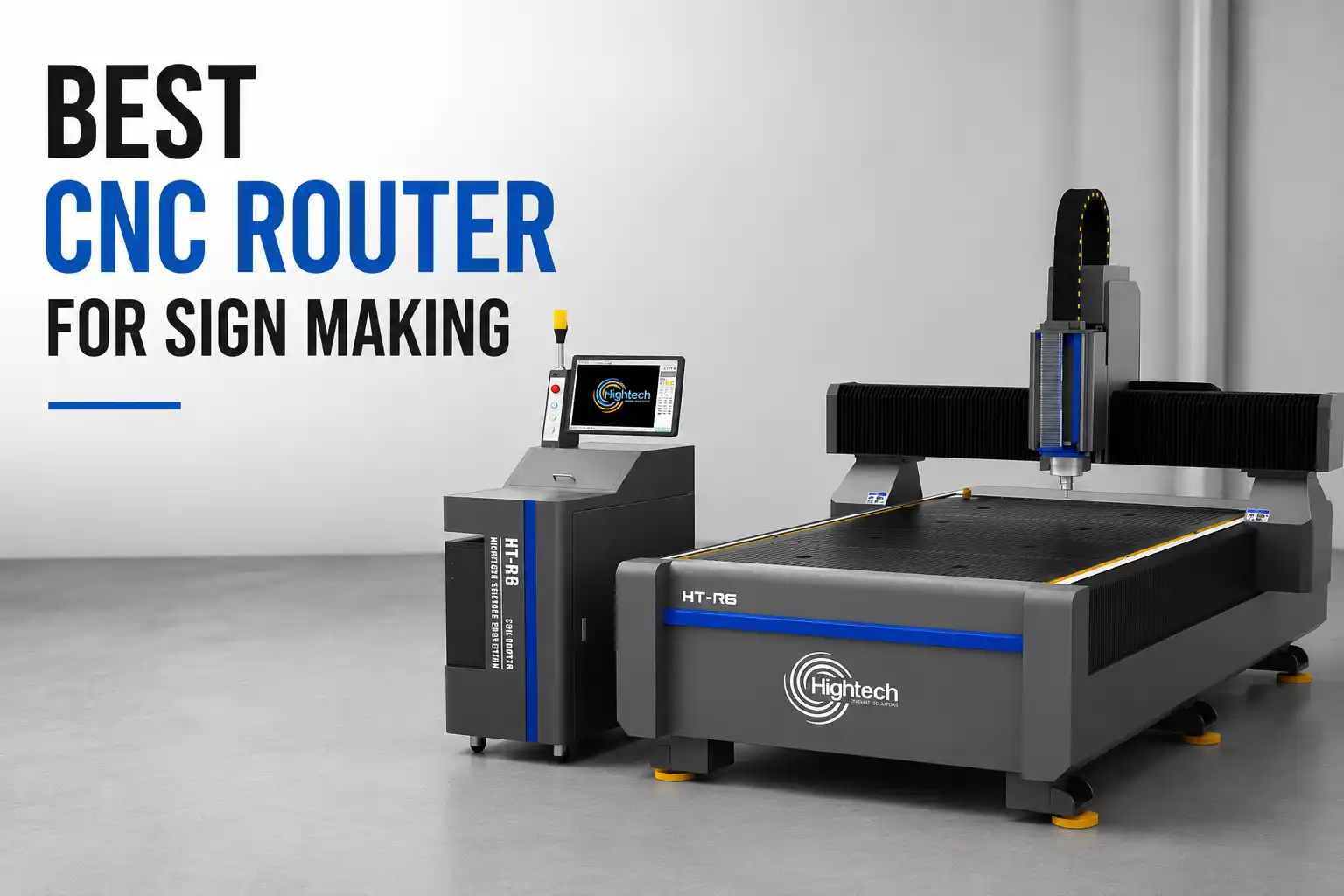
Table of Contents
The signage industry is a highly dynamic market driven by visual precision, material diversity, and rapid turnaround times. Finding the best CNC router for sign making is a critical milestone for any print shop, architectural fabricator, or commercial branding agency looking to scale production. By replacing manual layouts, jigsaws, and hand-routing tools with computerized numerical control (CNC), businesses can transition from basic, labor-intensive workflows into automated, high-efficiency manufacturing centers.
Whether an operation targets intricate ADA-compliant tactile Braille signs, thick dimensional letters, or architectural building facades, choosing a purpose-built CNC router for sign making ensures that complex geometric shapes and crisp corporate logos are cut flawlessly every time. Investing in the right technology allows workshops to process high-value materials with absolute consistency, directly unlocking higher profit margins and cutting down on manual rework.
Quick Answer: Best CNC Router for Sign Making
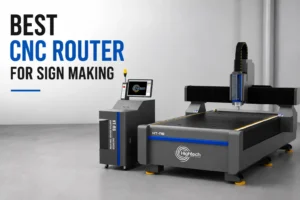
The best CNC router for sign making balances frame rigidity, high spindle speeds, and strong vacuum hold-down capabilities. For most commercial sign shops, an industrial flatbed machine featuring an Automatic Tool Changer (ATC) and an integrated optical registration camera system is the ideal solution. This combination allows the machine to switch between profiling, carving, and engraving bits while automatically aligning toolpaths with pre-printed graphics on a wide range of sheet stock.
Benefit | Business Impact | Sign Making Application
|
|---|---|---|
High Precision | Clean, detailed lettering and logos | 3D signs, engraving, branding |
Faster Production | Shorter delivery time for orders | Mass signage production |
Material Efficiency | Less waste during cutting | Acrylic & wood signage |
Automation | Reduced manual labor | Repetitive sign production |
Versatility | Multi-material capability | Indoor & outdoor signs |
Types of CNC Routers Used in Sign Making
Signage production demands flexible machinery that can transition quickly between different material thicknesses, tooling requirements, and design complexities. When researching industrial setups, introducing a dedicated platform from a reliable line of CNC Routers And Blade Cutters unifies disparate production steps—such as V-carving, contour-cutting, and drilling—into a single continuous program.
- Standard 3-Axis Flatbed Routers: The workhorse of the signage industry, moving along X, Y, and Z axes. Typically configured in full-sheet layouts, they are ideal for nesting dimensional letters from PVC, cutting wooden sign boards, and pocketing architectural panels.
- Automatic Tool Changer (ATC) CNC Routers: Sign production frequently requires multiple tools for a single job. An ATC machine eliminates manual stops by swapping tools directly from a carousel in a few seconds, making it an essential feature for maximizing shop-floor throughput.
- Vision-Assisted (CCD Camera) CNC Routers: For modern sign shops that combine digital printing with mechanical cutting, a vision-assisted system mounts a CCD digital camera right next to the spindle to read registration marks and perfectly align cut paths.
Best CNC Routers for Sign Making (Top Picks)
Selecting a machine requires matching your primary production volumes with a platform’s physical build and automation features. Selecting an under-powered system introduces immediate production bottlenecks, while buying an over-configured machine can tie up necessary working capital.
Entry-level CNC routers for beginners
New startups, custom boutique makers, and local print shops adding physical routing to their services require a machine that delivers precision without demanding a massive footprint. The HT-R1Q CNC Router Engraving Machine provides an excellent entry point, balancing high positional accuracy with accessible operations. It allows custom builders to transition away from manual saws and hand tools, ensuring that custom acrylic lettering and small wooden plaques are carved with clean, professional edges on every run.
Mid-range CNC routers for small businesses
As monthly sign orders grow, minimizing material handling and manual tool swaps becomes critical to staying profitable. Mid-sized sign businesses typically require full-sheet processing capabilities paired with vacuum hold-down tables. The HT-R3Q CNC Router Engraving Machine fits this demand by providing heavy welded steel framework stability. For workshops requiring expanded multi-tool workflows, upgrading to the HT-R3Q Plus CNC Router Engraving Machine enables rapid tool transitions and sustains higher feed rates across abrasive substrates like HDU foam and dense acrylics without manual disruption.
Industrial-grade CNC routers for large-scale production
For high-volume architectural fabricators, trade show display manufacturers, and commercial sign factories running continuous production shifts, machine uptime and speed are paramount. The HT-R6 CNC Router Engraving Machine represents an elite tier of industrial performance, featuring a heavy-duty chassis and a rapid-response automatic tool changer designed to handle large-volume sheet goods seamlessly. When configurations require ultimate heavy-duty structural frames and high-velocity multi-axis output, the HT-RX6 CNC Router Engraving Machine serves as the ultimate production platform, processing tough non-ferrous metals and thick plastics shift after shift without structural deflection.
Find the Right Machine for Your Application
Comparison Table of the Best CNC Routers
Machine Tier | Cutting Area | Spindle Power | Best Use Case
|
|---|---|---|---|
Entry-Level / Custom | Compact / Desktop Frame | 1.5 to 3.0 kW | Small custom plaques, acrylic engraving, boutique craft wood carves |
Mid-Range Commercial | Standard 4×8 Full Sheet | 4.5 to 6.0 kW | Full-sheet PVC nesting, HDU 3D molding, aluminum sign faces |
Industrial / High-Volume | 4×8 to 5×10+ Heavy Gantry | 9.0+ kW (ATC) | Continuous ACP cladding, mass dimensional letters, heavy thick acrylics |
Tips for Choosing the Right CNC Router for Your Sign Business
Budget considerations
Avoid the temptation to buy a cheap, hobbyist-grade machine to save money upfront. Lightweight frames deflect under heavy cutting loads, which ruins edge quality on expensive materials like cast acrylic or brass. Look for an industrial-grade machine with a welded steel frame and high-quality linear rails—it will deliver the long-term reliability and precise cuts required to pay for itself quickly.
Production volume
If your shop runs multiple sheets of material every day, a manual tool-change spindle will slow down your workflow and lower your profits. Upgrading to a machine with an Automatic Tool Changer (ATC) lets you run complex, multi-tool cut files continuously, allowing your operators to focus on assembly, finishing, and shipping instead of manual tool adjustments.
Material type
The types of signs you produce dictate the machine specs you need. Acrylic and plastics require high spindle speeds and vibration-free motion to prevent edge melting or chipping. High-density urethane (HDU) foam and wood require flexible multi-bit tooling to handle deep 3D carves. Aluminum composite panels (ACP) require an integrated mist coolant system and an ultra-stiff machine chassis to cut through tough metals cleanly without snapping bits.
Future scalability
A small machine bed might handle your current workload, but it forces you to spend extra time pre-cutting full material sheets down to size. Whenever possible, invest in a machine with at least a 4×8 foot workspace. This allows you to load standard, industrial-sized sheets of plywood, PVC, or aluminum composite panels directly onto the table, saving labor and leaving your business room to grow into larger commercial projects.
read more: cnc router use cases
Common Mistakes When Buying a CNC Router for Sign Making
- Underestimating the Value of a Vacuum Table: Relying on manual edge clamps or double-sided tape for hold-down takes a lot of extra time. It also increases the risk of parts slipping during cutting and makes it impossible to nest small dimensional letters tightly together on a sheet.
- Ignoring Dust Collection Requirements: Machining materials like MDF, HDU foam, and expanded PVC generates huge amounts of fine, static-charged dust. Running without a proper industrial dust collector creates a messy shop, wears out your linear guide rails prematurely, and poses a serious respiratory health risk to your operators.
- Overlooking Software Compatibility: A CNC router is only as good as the software that drives it. Make sure your new machine works smoothly with industry-standard sign design and nesting programs (like Vectric VCarve Pro, EnRoute, or SAi Flexi) to avoid production bottlenecks.
Conclusion
Finding the best CNC router for sign making is all about matching your business’s day-to-day material needs and production goals with the right machine features. Moving away from manual saws and hand tools allows your shop to cut down on material waste, eliminate human error, and deliver orders with the speed today’s commercial clients expect.
Investing in a high-quality, professional CNC platform transforms your shop into an agile, highly productive manufacturing facility. By choosing a system with a rigid frame, a powerful spindle, and a bed size that can grow with your business, you give your team the tools they need to take on bigger projects, work with premium materials, and scale your business profitably for years to come.
Frequently Asked Questions
What is the best CNC router for sign making?
The ideal machine depends on your shop’s production volume, but the best commercial choice is a flatbed CNC router featuring a 4×8 foot or 5×10 foot matrix vacuum table, an Automatic Tool Changer (ATC), and a CCD registration camera system.
Can CNC routers cut all materials used in sign making?
Yes, a professional CNC router can easily cut and engrave nearly all common sign-making materials, including expanded PVC, cast acrylic, polycarbonates, high-density urethane (HDU) foam, solid hardwoods, MDF, and aluminum composite panels (ACP/ACM).
Is CNC sign making profitable?
Yes, it is highly profitable. A CNC router dramatically reduces manual labor costs and speeds up production times, optimizing your material layouts to cut down on scrap waste and letting you create high-margin custom 3D signs.
Do I need experience to use a CNC router for sign making?
Modern, user-friendly CAD/CAM software has made learning the basics much easier, but operating an industrial machine safely and efficiently still requires some foundational training in feed rates, speed settings, and tool selection.
What are the best CNC router brands for sign making?
The top industrial brands focus on heavy steel frames, reliable control systems, and excellent technical support. Leading global manufacturers provide production-grade machines that combine high-torque drives with powerful spindles, offering sign shops a reliable, high-yield asset that will drive business growth for years to come.
Latest contents