
Blog
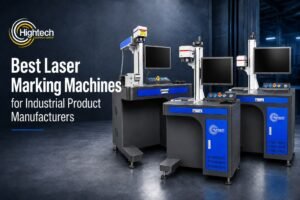
Best Laser Marking Machines for Industrial Product Manufacturers
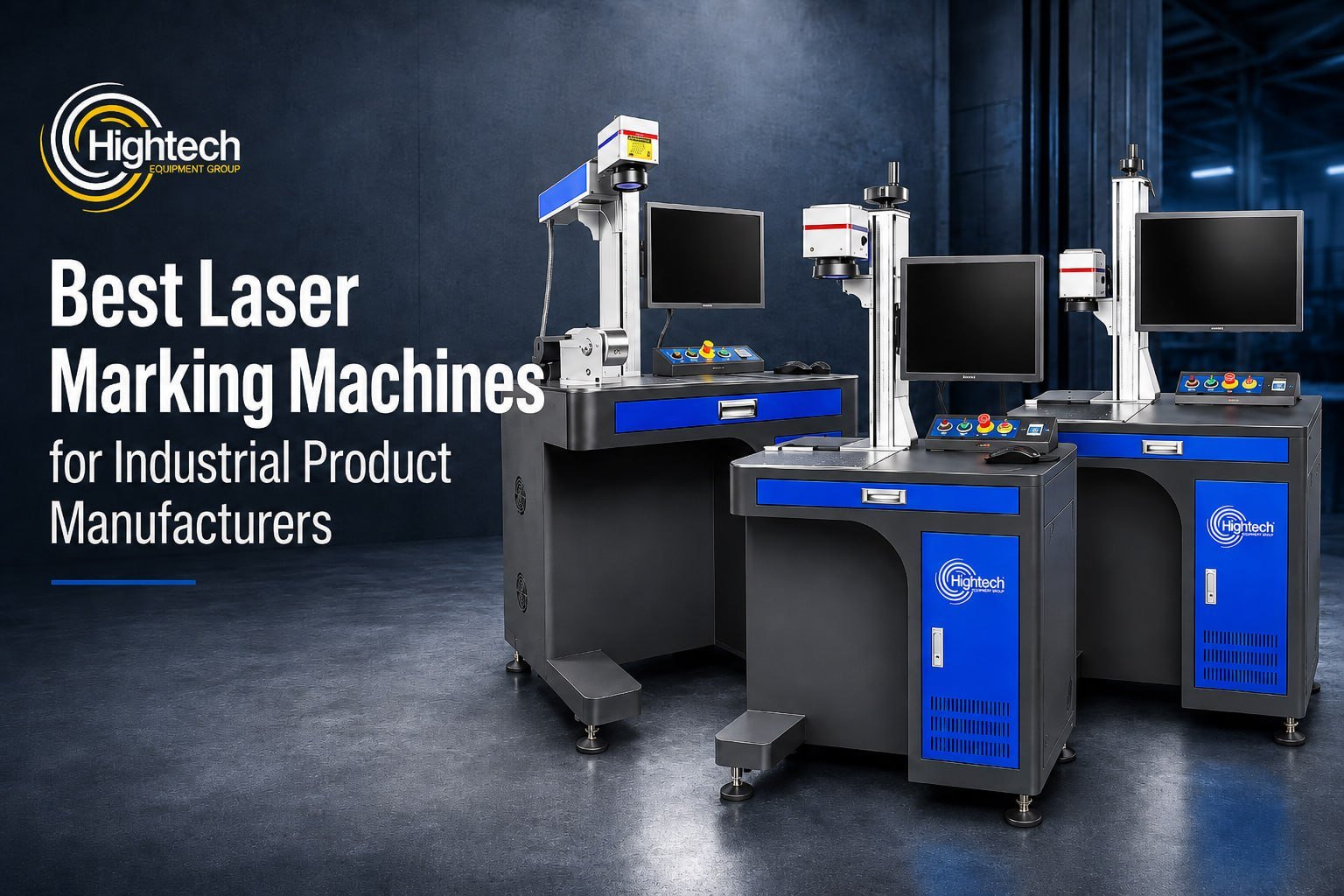
Table of Contents
For OEMs and industrial product manufacturers, the best laser marking machine is not simply the most powerful or the lowest-priced option. It is the system that creates a readable, permanent mark on your exact material at the required production speed, with the right software, fixture, safety setup, and supplier support. HT Industry offers four core laser marking machines for industrial buyers: fiber, MOPA fiber, UV, and CO2 laser marking machines. Each one fits a different combination of substrate, mark type, accuracy, and production workflow.
Quick Answer: Which Laser Marking Machine Is Best for Industrial Manufacturing?
There is no universal best laser marker for every factory. The right choice depends on material, mark durability, cycle time, code readability, and whether the machine will be used as a stand-alone workstation or integrated into a production process.
Industrial use case | Best HT machine type | Why it fits |
|---|---|---|
Metal OEM parts, nameplates, tools, serial numbers, QR codes | Fiber laser marking machine | Fast, permanent metal marking with low consumables; suitable for steels, aluminum, copper, brass, jewelry metals, ceramics, and selected plastics/rubber after testing. |
| Black marking on anodized aluminum, color marking on stainless steel, sensitive metal finishes | MOPA laser marking machine | Variable pulse control supports blackening, color effects, precision stripping, fine engraving, and delicate electronics or semiconductor applications. |
| Heat-sensitive plastics, electronics, glass, medical parts, fine detail | UV laser marking machine | 355 nm UV marking is suited to fine, high-reliability marks where reduced heat impact and small line width matter. |
| Organic and non-metal materials such as wood, leather, plastic, two-color board, packaging or signage materials | CO2 laser marking machine | CO2 laser marking provides high-speed marking on many non-metal and organic substrates; it is not the default choice for bare metal marking. |
Best Laser Marking Machine Types by Industrial Use Case
Best Overall for Metal OEM Parts: Fiber Laser Marking Machine
For most metal OEM parts, a fiber laser marking machine is the best starting point. It is well suited for permanent part identification, nameplates, logos, serial numbers, batch codes, QR codes, Data Matrix codes, anti-counterfeit marks, and component traceability. HT Industry lists its fiber laser marking machine as available in 30 W and 50 W configurations, with 200 x 200 mm and 300 x 300 mm working-area options, a Raycus laser source, Sino Galvo scanning head, rotary axis device, forced air cooling, and EZCAD control software.
For industrial buyers, the main value of fiber laser marking is reliability and low operating cost. There is no ink, label, solvent, or printing plate to manage, and the mark is created directly on the part surface. This is useful for automotive components, electrical housings, tooling, machined parts, valves, tags, plates, and metal products that need durable identification through handling, cleaning, abrasion, heat exposure, or downstream assembly.
Choose fiber when the primary materials are iron, steel, aluminum, copper, brass, gold or silver jewelry, ceramics, and test-qualified plastics or rubber. Use 30 W for general marking and moderate-speed production; consider 50 W when the application needs faster cycle time, deeper engraving, or more demanding metal marking. Always validate the final mark on the real substrate, because surface finish, coatings, oxide layers, and alloy composition affect contrast and depth.
Best for Black Marking, Color Marking, and Sensitive Metal Finishes: MOPA Fiber Laser Marking Machine
A MOPA laser marking machine is the best choice when the application needs more pulse control than a standard fiber system. HT Industry highlights MOPA use cases such as color marking on stainless steel, blackening on anodized aluminum, precision stripping of anodic layers, deep engraving, high-frequency line detailing, ITO coating processing, and delicate component marking.
MOPA systems are especially valuable when the visual result matters as much as permanence. For example, a manufacturer may need a dark black mark on an anodized aluminum enclosure without damaging the coating, a high-contrast logo on a brushed stainless panel, or fine text on a small electronic component. MOPA pulse-duration and frequency flexibility gives engineers a broader process window to tune heat input, surface reaction, contrast, and edge quality.
Choose MOPA when the mark specification includes black anodized aluminum, color effects on stainless steel, fine line control, delicate metal surfaces, electronics, semiconductor components, precision stripping, or high-contrast branding. It may not be necessary for straightforward serial numbers on standard steel parts where a standard fiber marker meets the requirement at lower complexity.
Best for Heat-Sensitive Plastics, Electronics, Medical, and Fine Detail: UV Laser Marking Machine
A UV laser marking machine is the best fit when parts are small, sensitive, or prone to heat damage. HT Industry lists a 355 nm UV wavelength, 3-10 W laser power, 100 x 100 mm marking range, <=0.01 mm line width, <=0.01 mm marking depth, <=7,000 mm/s marking line speed, and software compatibility with AutoCAD, CorelDRAW, Photoshop-style workflows, data extraction, automatic serial numbers, and production dates.
UV marking is often selected for plastics, glass, circuit boards, medical packaging, electronic components, and fine-detail codes because it can produce crisp marks with less thermal stress than higher-heat processes. For OEMs, this matters when the part must retain dimensional stability, coating appearance, insulation integrity, or clean visual branding.
Choose UV when the part is heat-sensitive, small, thin, transparent, coated, or made from plastic with uncertain laser response. Because plastics vary heavily by resin, pigment, filler, flame retardant, and color, UV applications should always be sample tested. A mark that looks excellent on black ABS may perform very differently on white polycarbonate, nylon, PEEK, or a glass-filled formulation.
Best for Organic and Non-Metal Materials: CO2 Laser Marking Machine
A CO2 laser marking machine is the best option for many organic and non-metal materials. HT Industry describes its CO2 system as suitable for leather, wood, plastic, two-color boards, and other solid materials, with a CO2 laser, high-speed scanning galvanometer, beam-expanding focusing system, height-adjustable laser positioning, multiple lens options, advanced software for watermarks and flight marking, and an eco-friendly ventilation design.
CO2 laser marking is useful for manufacturers working with packaging materials, labels, signage materials, wood products, leather goods, plastic panels, acrylic-type materials, rubber-like materials, coated boards, and branding components. HT Industry lists a <=12,000 mm/s marking line speed, 0.09 mm line width, 0.012 mm working accuracy, and 0.01-2 mm marking depth for its CO2 laser marking machine, making it a strong option when speed and non-metal compatibility are priorities.
Choose CO2 when the main materials are organic, polymeric, or non-metal. Do not choose CO2 as the default for bare metals unless the application uses appropriate coatings or additives. For metal OEM parts, fiber or MOPA will usually be the better starting point.
Laser Marking Machine Comparison Matrix
Machine type | Best materials | Typical industrial uses | Key advantages | Limitations / validation notes | Best buyer fit |
|---|---|---|---|---|---|
Fiber | Iron, steel, aluminum, copper, brass, jewelry metals, ceramics, selected plastics/rubber after testing | Metal part IDs, serial numbers, QR/Data Matrix codes, nameplates, tools, components | Permanent marks, fast cycle time, low consumables, 30 W and 50 W options, EZCAD control, rotary axis option | Surface finish and coating affect contrast; plastics and rubber require testing | OEMs marking metal parts at recurring production volume |
MOPA | Anodized aluminum, stainless steel, sensitive metal finishes, electronics and semiconductor materials after testing | Black marking, color marking, precision stripping, fine engraving, electronics marking | Pulse-duration and frequency control; strong for controlled surface effects and fine-detail applications | Higher process tuning requirement than standard fiber; color results depend on material and settings | Engineering teams needing controlled contrast, black marks, color effects, or delicate metal marking |
UV | Heat-sensitive plastics, glass, electronics, circuit boards, medical components, packaging materials after testing | Fine codes, logos, production dates, serial numbers, delicate part marking | 355 nm wavelength, fine line width, reduced heat impact, automatic serial-number/date support | Smaller marking range and lower power than fiber; plastic formulations must be validated | Manufacturers of electronics, medical components, precision plastics, and high-detail parts |
CO2 | Wood, leather, plastic, two-color boards, packaging, signage-related non-metals, other solid materials | Branding, labels, product IDs, watermarks, flight marking, packaging and organic-material marking | High marking speed, flexible formats, multiple lens options, ventilation-friendly design | Not the default for bare metals; fume extraction and substrate testing are important | Factories marking non-metal, organic, packaging, or signage materials |
How to Choose the Best Laser Marking Machine for Your Factory
Use the following procurement framework before requesting a quote. It will help HT Industry recommend a machine configuration and will also help your internal engineering, production, and purchasing teams compare options consistently.
- Start with material compatibility. Identify the exact substrate, coating, surface finish, color, thickness, and any downstream treatment. Fiber and MOPA are the first options for most metal parts; UV is preferred for heat-sensitive plastics and delicate components; CO2 is preferred for many organic and non-metal materials. Mixed-material factories may need more than one process or a sample test across material families.
- Define the mark type and durability requirement. Specify whether the mark is text, logo, serial number, production date, QR code, Data Matrix code, UDI, coating removal, annealing, ablation, color marking, or deep engraving. Also define what the mark must survive: abrasion, cleaning, heat, coating, sterilization, outdoor exposure, or handling.
- Match power, pulse control, lens, and marking area to production needs. Higher power is not automatically better. A 30 W fiber system may be enough for general serial-number marking, while a 50 W fiber may be better for speed or depth. MOPA is the better choice when pulse control is the differentiator. UV is chosen for fine detail and heat-sensitive work. CO2 is chosen for non-metal throughput and substrate fit.
- Evaluate cycle time and fixture requirements. A machine that creates a perfect mark slowly may still fail in production. Confirm part loading, part orientation, batch fixtures, rotary marking, line-side conveyors, operator workflow, and whether the mark must be applied before or after assembly.
- Confirm software, serialization, and barcode capabilities. OEM buyers should confirm support for variable data, automatic serial numbers, production dates, code generation, file import, operator permissions, database extraction, and barcode verification workflows. HT Industry lists EZCAD on fiber and MOPA systems and lists file/software compatibility and automatic serial-number/date support on UV systems.
- Plan safety, fume extraction, and operator training. Industrial lasers require appropriate enclosures, interlocks, eyewear policies, ventilation, smoke extraction, operator training, maintenance procedures, and facility power planning. U.S. buyers should review applicable laser product and workplace safety requirements with qualified safety personnel.
- Validate supplier support, spare parts, warranty, and training. Procurement should compare more than purchase price. Ask about installation support, remote guidance, training videos, manuals, spare-parts availability, warranty terms, software support, and response process after the machine is commissioned.
Find the Right Machine for Your Application
Frequently Asked Questions
What is the best laser marking machine for OEM production?
For most metal OEM parts, a fiber laser marking machine is the best starting point because it creates permanent, high-contrast marks with low consumable cost. If the application requires black marking on anodized aluminum, color marking on stainless steel, or finer pulse control, MOPA is often the better choice. For heat-sensitive plastics, electronics, glass, and medical components, evaluate UV laser marking. For wood, leather, plastic, two-color boards, and organic or packaging materials, evaluate CO2 laser marking.
Is fiber, MOPA, UV, or CO2 laser marking best?
It depends on the substrate and required mark. Fiber is the baseline choice for many metal parts. MOPA is a specialized fiber option for pulse-controlled black/color marking and sensitive metal finishes. UV is preferred for fine detail and heat-sensitive materials. CO2 is preferred for many non-metal and organic materials.
Which laser marking machine is best for QR codes, Data Matrix codes, and serial numbers?
Fiber, MOPA, and UV machines can all be used for high-resolution machine-readable codes when matched to the material. The best option depends on code size, contrast, scan grade, cycle time, and durability after downstream processes. Buyers should validate code readability after cleaning, coating, heating, abrasion, or sterilization where relevant.
Latest contents