

Blog
Safety Tips When Using a CO2 Laser Cutting Machine
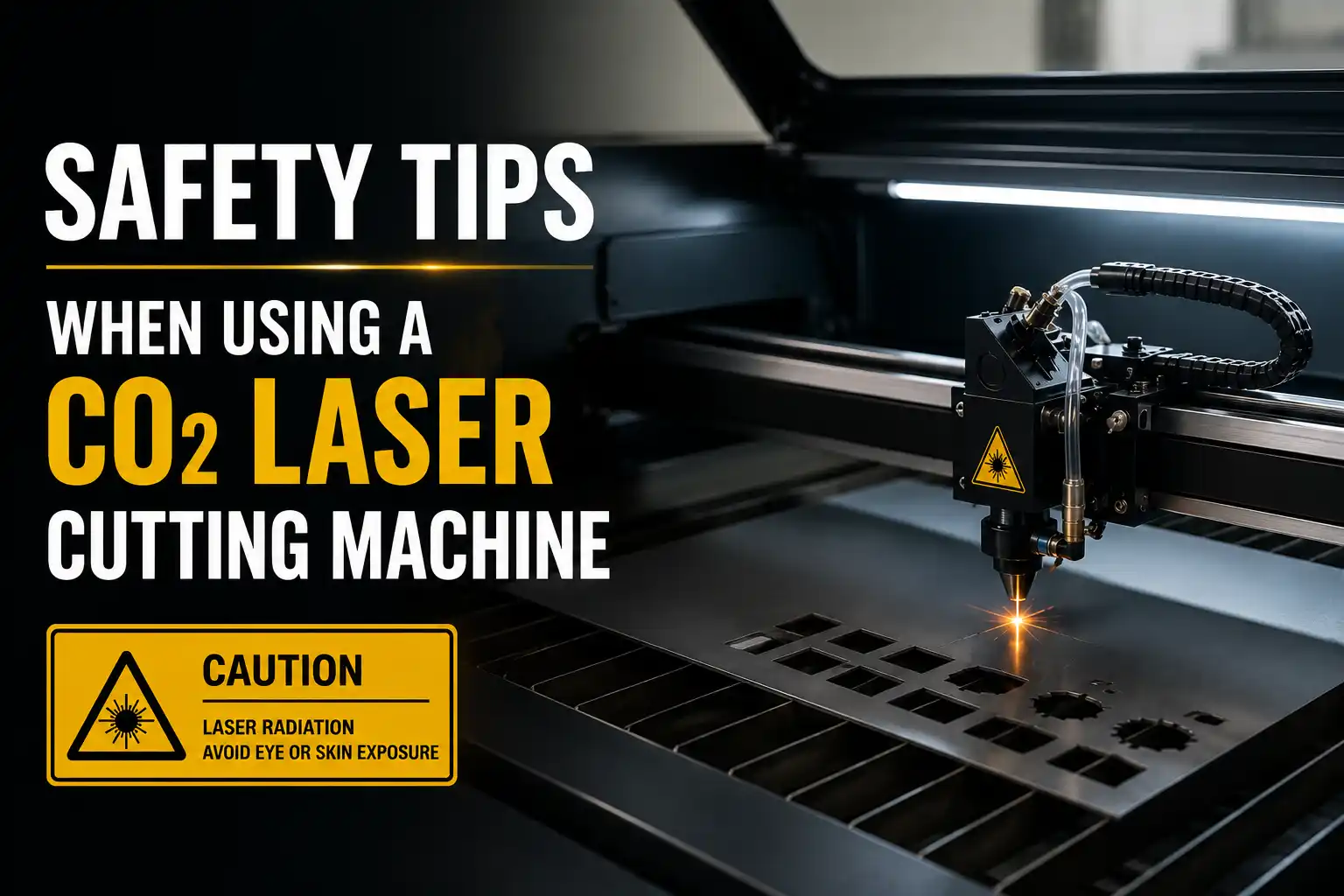
Table of Contents
Applying the right CO₂ laser machine safety tips is about far more than ticking a compliance box. In busy sign-making and fabrication shops where laser machines run for hours at a time, safety and productivity are tightly linked: a fire, a fume incident, or an unplanned breakdown does not just endanger people, it halts production. This guide goes beyond a basic precaution checklist to connect operator safety, machine safety, and workflow safety, giving you a practical framework for running a CO₂ laser cutting machine reliably in a real production environment.
Quick Overview: Essential Safety Principles for CO₂ Laser Cutting Operations
Effective CO₂ laser cutting machine safety in industrial environments rests on a few core principles: never run the machine unattended, always cut with ventilation active, only process laser-safe materials, keep the machine maintained, and ensure every operator is trained on standard operating procedures. When these become daily habits rather than occasional reminders, most laser-related accidents simply do not happen.
The checklist below organizes the essential safety actions by how often they should be performed, making it easy to build them into daily, weekly, and monthly routines.
Safety Area | Key Action | Frequency |
Fire Prevention | Never leave the machine unattended; keep an extinguisher nearby and clear debris from the bed | Every job |
Ventilation & Fumes | Confirm fume extraction and exhaust are running before cutting | Every job |
Material Check | Verify material is laser-safe and never cut PVC or unknown plastics | Every job |
Optics & Lens | Inspect and clean lens and mirrors; check beam alignment | Weekly |
Cooling System | Check coolant level, flow, and temperature | Weekly |
Electrical & Safety Interlocks | Test door interlocks, e-stop, and wiring for faults | Monthly |
Operator Training | Review SOPs and refresh operator safety training | Ongoing |
Understanding where accidents come from is the first step to preventing them. In commercial fabrication settings, most laser incidents trace back to a handful of recurring hazards, often made worse by deadline pressure and skipped maintenance.
Fire Hazards During CO₂ Laser Cutting
Fire is the most common and most serious risk in CO₂ laser cutting. The beam works by burning or vaporizing material, so any flammable stock, especially wood, acrylic, paper, and cardboard, can ignite if the beam lingers, the material is too thin, or settings are wrong. The single biggest cause of laser fires is leaving the machine running unattended. A small flare-up that an operator would catch in seconds can become a serious fire in minutes if no one is watching. Accumulated debris and resin in the cutting bed and exhaust also feed fires, which is why regular cleaning is a safety measure, not just housekeeping.
Consider a common scenario in a busy sign shop: an operator starts a long cut on thin acrylic, then steps away to handle another task. A slight focus or power error causes the material to flame, and with no one present, the fire spreads to debris in the bed before anyone notices. The incident, and the days of lost production that follow, would have been prevented entirely by the simple rule that the machine is never left running alone. Most laser fires are not freak events; they are predictable outcomes of skipped basics under deadline pressure.
Toxic Fumes and Ventilation Risks in CO₂ Laser Cutting
Cutting and engraving release smoke, fine particulate, and potentially toxic gases. Without proper extraction, these fumes accumulate in the workspace and create both immediate and long-term health risks for operators. Some materials are far more dangerous than others, and the danger is often invisible, which is why ventilation can never be treated as optional. A fume extraction system that is undersized, clogged, or switched off to save energy is one of the most common hidden hazards in laser workshops.
Laser Exposure and Operator Safety Risks
Although CO₂ laser light is invisible, the beam and its reflections can cause severe burns and serious eye injury. Risks rise when operators bypass safety interlocks, open enclosures during operation, or run a machine with damaged panels. Proper enclosure, functioning interlocks, and disciplined operating habits keep the beam contained where it belongs. Reflective materials deserve special caution because they can redirect the beam unpredictably.
Electrical and Cooling System Failures
CO₂ lasers depend on high-voltage power supplies and a cooling system to protect the laser tube. Electrical faults pose shock and fire risks, while a cooling failure can cause the tube to overheat, leading to costly damage or sudden failure mid-production. Treating the cooling and electrical systems as part of routine laser machine operation and maintenance prevents both safety incidents and the unplanned downtime that comes with them.
The right equipment forms the foundation of a safe laser operation. Even the most careful operator needs proper protective gear and engineering controls to work safely around a CO₂ laser.
Personal Protective Equipment (PPE) for CO₂ Laser Cutting
Operators should have laser safety eyewear rated specifically for the CO₂ wavelength, since ordinary safety glasses offer no protection against laser light. Heat-resistant gloves protect hands when handling freshly cut material, and appropriate clothing reduces burn risk. PPE is the last line of defense, working alongside, not instead of, a properly enclosed and maintained machine. Keeping a suitable fire extinguisher, ideally a CO₂ or clean-agent type, within arm’s reach of the operator is equally essential.
Ventilation and Fume Extraction Systems for CO₂ Laser Cutting
A correctly sized fume extraction and exhaust system is one of the most important safety investments in any laser workshop. It pulls smoke and toxic gases away from the operator and out of the building, or through filtration designed for the materials being processed. The system must be matched to the machine’s output and the materials in use, and it should be inspected regularly for blockages and worn filters. When evaluating industrial CO₂ laser cutting systems, confirming that ventilation capacity matches your production volume protects both health and continuity of operation.
Preventive Maintenance as a Safety Practice
Maintenance and safety are inseparable in laser cutting. A clean, well-aligned lens cuts efficiently at lower power, reducing fire risk, while a dirty or cracked lens can overheat and shatter. Clogged exhaust ducting lets fumes back up into the workspace, and a neglected cooling system invites tube failure mid-job. Building inspection of optics, mirrors, ducting, and coolant into a fixed schedule turns safety from a reactive scramble into a predictable routine. This kind of preventive care is central to optimizing production efficiency and workflow, because the same steps that keep operators safe also keep the machine running without unplanned stoppages.
industrial CO₂ laser cutting systems
Material selection is one of the most overlooked aspects of laser safety, yet it directly determines fire and toxicity risk. Knowing what is safe to cut and what must never enter the machine is essential operator knowledge.
The most important rule is to never cut PVC or any vinyl or chlorine-containing plastic. When lasered, these release chlorine gas, which forms corrosive hydrochloric acid that harms operators and rapidly destroys the machine’s optics and metal components. Other materials to avoid include polycarbonate, which cuts poorly and discolors, ABS, which melts and emits toxic fumes, and any material of unknown composition. When in doubt about a material, do not cut it until its safety is confirmed.
- Generally safe: wood, MDF, acrylic (cast and extruded), paper, cardboard, leather, and many fabrics, all with proper ventilation.
- Never cut: PVC, vinyl, polycarbonate, ABS, fiberglass, and any chlorine-containing or unknown material.
- Use caution: coated or treated materials, which may carry finishes that produce hazardous fumes when burned.
Documenting approved materials in a posted reference and training operators to verify stock before loading prevents one of the most damaging and avoidable categories of laser accidents.
Even in a well-run shop, operators must know how to respond quickly when something goes wrong. Clear, practiced emergency procedures turn a potential disaster into a controlled, minor event.
For a fire in the cutting bed, operators should stop the job and cut power using the emergency stop, keep the lid closed to starve a small flame of oxygen where appropriate, and be ready to use the extinguisher if the fire grows. For an electrical fault or burning smell, the machine should be powered down at the source and not used again until inspected. For any cooling system warning, cutting should stop immediately to protect the laser tube. Every operator should know the location of the emergency stop, the extinguisher, and the main power disconnect before they ever run a job.
Building these responses into written standard operating procedures, and rehearsing them, is a hallmark of professional fabrication facilities. Pairing trained operators with reliable, well-designed industrial laser cutting equipment is the most effective way to keep both people and production safe.
Find the Right Machine for Your Application
Frequently Asked Questions
What are the most important safety tips when using a CO₂ laser cutting machine?
Never run the machine unattended, always cut with ventilation and fume extraction active, only process laser-safe materials, keep a fire extinguisher within reach, maintain the optics and cooling system, and ensure every operator is trained on standard operating procedures.
Why is ventilation important for CO₂ laser cutting?
Cutting releases smoke and potentially toxic gases that endanger operator health and can damage the machine. A properly sized fume extraction system removes these contaminants from the workspace, making ventilation essential rather than optional.
Can a CO₂ laser cutting machine cause a fire?
Yes. The beam burns and vaporizes material, so flammable stock can ignite, especially if the machine is left unattended or debris builds up in the bed. Never leaving the machine running unsupervised is the most effective fire-prevention measure.
Can a CO₂ laser cutting machine cause a fire?
Never cut PVC, vinyl, or other chlorine-containing plastics, as they release corrosive, toxic chlorine gas. Polycarbonate, ABS, fiberglass, and any unknown materials should also be avoided due to toxic fumes or fire risk.
How often should a CO₂ laser cutting machine be inspected for safety?
Perform quick fire, ventilation, and material checks every job; clean and inspect optics and the cooling system weekly; test electrical systems and safety interlocks monthly; and keep operator training current on an ongoing basis.
How does CO₂ laser cutting safety affect production efficiency?
Safety and efficiency go hand in hand. Preventing fires, fume incidents, and system failures avoids the downtime, equipment damage, and repairs that interrupt production, so a safer shop is also a more productive and reliable one.
Conclusion: Creating a Safer CO₂ Laser Cutting Workplace
Safe CO₂ laser cutting is the result of consistent habits rather than one-time precautions. By understanding the real risks, fire, fumes, beam exposure, and system failures, equipping the shop with the right PPE and ventilation, cutting only laser-safe materials, and preparing operators with clear emergency procedures, businesses protect their people and their equipment at the same time. Safety in laser cutting workshops and manufacturing industries is ultimately inseparable from reliability: a shop that prevents accidents also prevents the downtime, damage, and lost production that come with them. Investing in well-built machines, proper maintenance, and ongoing training is how the most productive fabrication facilities stay both safe and competitive.
Latest contents