

Blog
Steps to Choose the Right Channel Letter Bending Machine
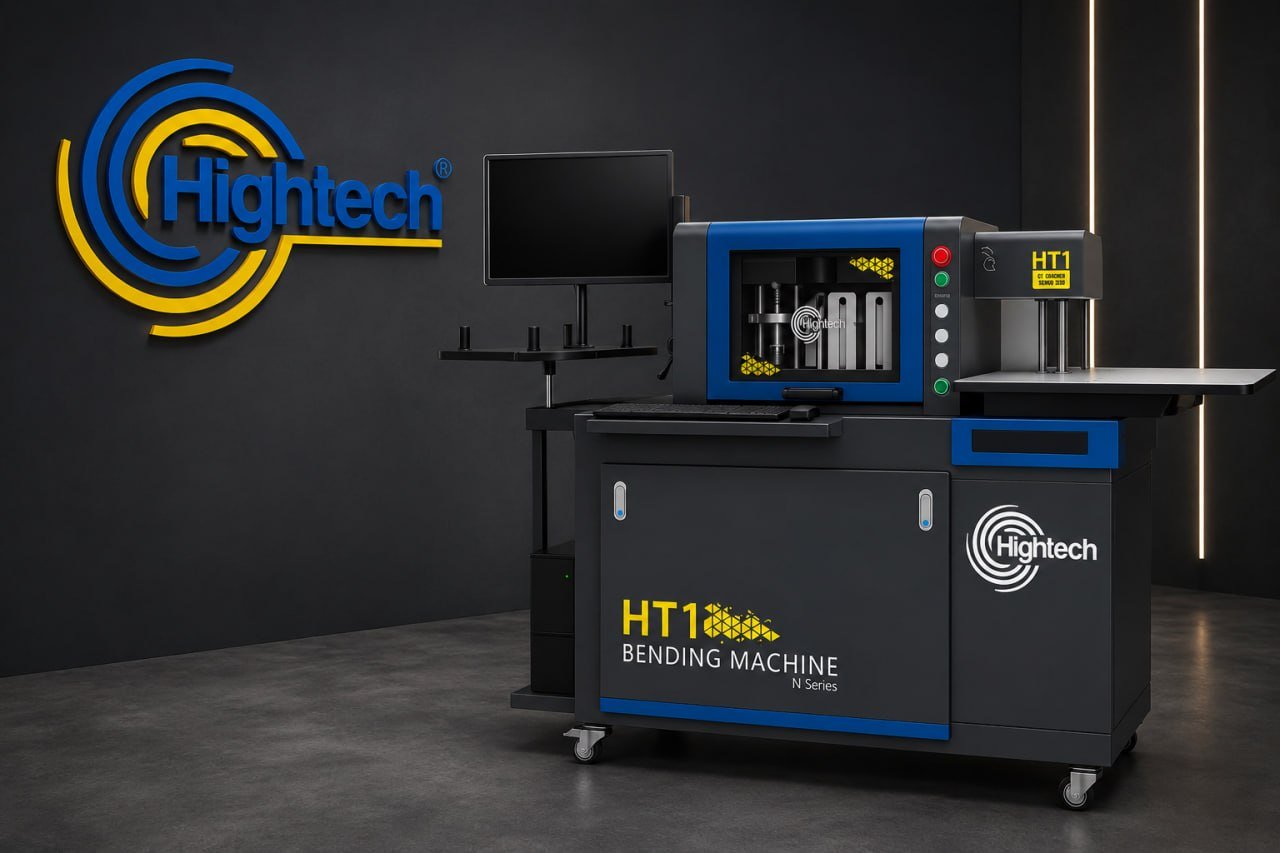
Table of Contents
Why Your Choice of Channel Letter Bender Matters? Choosing the right channel letter bending machine is a balance between your production volume, material requirements, and the reliability of the manufacturer’s after-sales service. The ideal automatic bender should not only match your current production needs but also accommodate future growth. Speed, material versatility—particularly handling aluminum and steel—and dependable technical support are critical factors.
Investing in a machine that aligns with both immediate and long-term goals ensures operational efficiency, reduces downtime, and improves overall product quality.
Quick Answer: How Do You Choose the Right Bending Machine?
How do you choose the right bending machine? Start by matching the machine to your production volume, material types, bending accuracy, software compatibility, and after-sales support needs. For channel letter production, the right bending machine should handle your common materials, such as aluminum, stainless steel, and galvanized steel, while delivering consistent bending quality and reducing manual labor.
A good channel letter bending machine should also support your future business growth. Instead of choosing only based on price, compare machine speed, thickness capacity, precision, automation level, spare parts availability, and the manufacturer’s technical support. These factors directly affect production efficiency, downtime, material waste, and long-term return on investment.
Step 1: Assess Your Production Scale and Business Needs
Before purchasing, it’s essential to understand your production scale because it directly influences machine type, speed, and features required. The right machine for a small shop differs greatly from one needed for high-volume industrial production. Evaluating your monthly output, project types, and business growth trajectory ensures that your investment provides maximum value.
Small Shops and New Sign Makers
For small shops and new sign makers, the best choice is usually a compact, easy-to-use channel letter bending machine that can handle common materials without requiring a large production team. At this stage, businesses should focus on affordability, simple operation, stable bending quality, and reliable technical support. A machine with user-friendly software and basic automation can help reduce manual work while keeping the initial investment under control.
Growing Signage Businesses
Medium-scale operations require machines that combine higher speed with flexibility. These machines often integrate multiple functions like slotting, flanging, and bending at different angles. For companies experiencing growth, investing in a machine with scalability allows them to increase output without needing a new system immediately. This step ensures consistency, reduces manual errors, and supports more complex signage designs.
High-Volume Industrial Production
Large-scale production requires heavy-duty machines capable of continuous operation with high precision. Industrial benders are designed for high-speed, large-volume outputs. They include features like automated feeders, reinforced components, and advanced control systems to ensure repeatability. Such machines reduce material waste, maintain quality, and maximize throughput, making them suitable for factories and major signage manufacturers.
Step 2: Evaluate Material Compatibility and Versatility
Material versatility is a key factor in choosing the right bender, as not all machines handle every type of metal or thickness efficiently. Channel letters are commonly made from aluminum, stainless steel, and galvanized steel, each with different bending characteristics. Choosing a bender that can manage various materials ensures long-term adaptability and reduces the need for multiple machines.
Working with Aluminum, Stainless Steel, and Galvanized Steel
Choosing a bender that can handle different metals efficiently is critical because each material behaves differently under pressure and bending stress.
Aluminum, stainless steel, and galvanized steel are the most commonly used materials in channel letters, yet their mechanical properties require specific considerations:
- Aluminum: Lightweight and highly malleable, aluminum bends easily but can deform if the machine lacks precise control. Its flexibility makes it ideal for intricate shapes.
- Stainless Steel: Stronger and more rigid, it demands higher bending force and stable mechanical components to avoid warping or surface scratches. Precision and repeatability are key when working with this metal.
- Galvanized Steel: Coated for corrosion resistance, galvanized steel has slightly higher stiffness. Machines need to account for the coating to prevent cracking or damaging the protective layer.
A versatile bender allows smooth transitions between these metals without requiring major reconfiguration, ensuring efficiency, consistent quality, and reduced material waste.
Thickness and Depth Capacity
Understanding the bender’s thickness and depth limits prevents operational bottlenecks.
Modern channel letter benders often include integrated functions that combine multiple steps into a single automated process.
This reduces manual labor, improves accuracy, and ensures that every letter produced meets the required design specifications. Proper integration of these functions is particularly important for medium to high-volume production, where small errors can accumulate and affect overall product quality.
- Slotting: Creates precise connection points for assembling letters, ensuring they fit together without gaps or misalignment.
- Flanging: Strengthens the letter edges, adds rigidity, and ensures smooth installation on signboards.
- Cutting: Produces clean edges and accurate dimensions, reducing the need for secondary trimming or finishing.
Integrated slotting, flanging, and cutting allow for seamless production, higher consistency across batches, and less dependency on manual adjustments, ultimately saving time and reducing errors.
Step 3: Analyze Technical Performance and Ease of Use
Technical performance and ease of use are crucial for maximizing productivity and maintaining consistent quality. A machine that delivers precision, repeatability, and intuitive operation reduces errors, material waste, and training time. Operators should be able to execute complex bends and designs efficiently, while the control system should ensure reliable performance across all production runs.
Precision and Repeatability
High precision ensures that every channel letter matches the design specifications, and repeatability guarantees consistent quality across batches. Machines with advanced servo-controlled motors and reinforced bending arms can maintain accuracy even after hundreds of cycles. This reduces errors and material waste, especially when producing identical letters for multiple signs. For businesses handling medium to high-volume orders, precision and repeatability are non-negotiable for maintaining customer satisfaction.
User-Friendly Software and Design Integration
Intuitive software allows operators to directly import designs and automate bending sequences.
Modern benders often support CAD or vector design files, streamlining the workflow from design to production. User-friendly interfaces minimize operator errors and reduce the learning curve, which is particularly important for startups or shops with limited technical staff. Integration with design software ensures that complex letters and logos are produced accurately every time.
Step 4: Prioritize Build Quality and Hardware Reliability
Build quality and reliable hardware are essential for long-term performance and minimal maintenance issues. Machines that combine robust components with high-quality assembly withstand daily production demands without frequent repairs or downtime.
Robust Mechanical Components
Machines built with strong frames, high-quality motors, and precision gear systems offer superior reliability. Mechanical stability prevents deformation under continuous use, maintaining consistent bending angles and reducing operational errors. Reinforced components also extend the machine’s lifespan, providing better ROI over time.
Maintenance and Long-term Durability
Ease of maintenance and availability of replacement parts are critical for minimizing downtime. Machines with accessible components and straightforward service procedures reduce repair time. Regular preventive maintenance ensures that the bender remains accurate and functional, allowing businesses to meet deadlines without interruptions.
Step 5: Research Manufacturer Support and After-Sales Service
Manufacturer support and after-sales service are as important as the machine itself. Even the most reliable machines require occasional maintenance, part replacements, or technical guidance. Selecting a manufacturer with strong customer service ensures your production line remains uninterrupted.
Reputation of Top Brands (Varisigns, Accu-Bend, etc.)
Choose manufacturers with proven industry experience and positive customer feedback. Brands such as Varisigns and Accu-Bend are known for durable machines and responsive technical support. Researching reviews and client testimonials helps identify companies that provide consistent service and engineering expertise.
Warranty and Technical Response Time
A solid warranty and rapid response for technical issues reduce potential downtime. Machines backed by comprehensive coverage and fast repair support ensure production continuity. Quick access to replacement parts and online support further guarantees minimal disruption, making your investment safer and more reliable.
Common Mistakes When Choosing a Bending Machine
Many businesses focus only on the machine price when choosing a channel letter bending machine. While budget is important, the cheapest option is not always the most cost-effective choice. A machine with limited material compatibility, weak components, or poor technical support can lead to higher long-term costs through downtime, rework, and production delays.
Another common mistake is ignoring production volume. A small shop may not need a heavy-duty industrial bender, while a growing signage company should avoid buying a machine that cannot support future order increases. Choosing a machine without considering scalability can force businesses to replace equipment sooner than expected.
Material compatibility is also often overlooked. Channel letters may require aluminum, stainless steel, galvanized steel, or different profile depths and thicknesses. If the machine cannot handle your most common materials smoothly, production quality will suffer.
Some buyers also fail to check software compatibility and ease of operation. A user-friendly control system that supports design file import can reduce operator errors and shorten training time. Finally, ignoring after-sales service, spare parts availability, and technical response time is a major risk. Even a strong machine needs dependable support to keep production running.
Bending Machine Comparison Checklist
| Evaluation Factor | What to Check | Why It Matters |
|---|---|---|
| Production Volume | Daily or monthly channel letter output | Helps you choose a machine that matches your current workload and future growth. |
| Material Compatibility | Aluminum, stainless steel, galvanized steel, and common channel letter profiles | Ensures the machine can handle the materials you use most often. |
| Thickness and Depth Capacity | Maximum material thickness, profile depth, and bending range | Prevents production limits when working on larger or more complex channel letters. |
| Bending Precision | Servo motor quality, repeatability, and bending accuracy | Reduces errors, improves consistency, and lowers material waste. |
| Automation Level | Automatic feeding, slotting, flanging, cutting, and bending functions | Saves labor time and improves production speed. |
| Software Compatibility | CAD/vector file support and design import options | Makes the workflow from design to production faster and easier. |
| Ease of Operation | Control panel, interface design, operator training, and workflow simplicity | Reduces learning time and minimizes human error. |
| Build Quality | Machine frame, motors, gears, bending arms, and mechanical stability | Improves durability and long-term performance. |
| Maintenance Needs | Accessibility of parts, service requirements, and cleaning routines | Helps reduce downtime and repair costs. |
| After-Sales Support | Warranty, technical support, spare parts, and response time | Protects your investment and reduces operational risk. |
| Scalability | Ability to support higher production volume or more complex projects later | Prevents early machine replacement as your business grows. |
Why HighTech Industry is Your Ideal Partner for Automatic Bending Solutions?
Choosing the right partner for your channel letter bending machines is as important as selecting the machine itself. HighTech Industry stands out because it offers direct access to manufacturers, superior build quality, and comprehensive support, ensuring that your production runs smoothly and efficiently. Working directly with HighTech eliminates middlemen, reduces costs, and provides reliable solutions tailored to your business needs.
- Direct Engineering Support:
HighTech provides direct technical assistance without intermediaries, enabling faster problem-solving and tailored solutions for your production challenges. - Superior Build Quality:
Machines are engineered with high-quality components, reinforced frames, and precise mechanisms to ensure durability, consistent performance, and minimal maintenance issues. - Guaranteed Availability of Spare Parts:
All critical parts are readily available, even years after purchase, preventing production downtime and maintaining continuous operations. - Customized Solutions for Your Business:
HighTech can adapt machines to match your production scale, material types, and workflow requirements, ensuring you get the most efficient and reliable system. - Long-Term Reliability:
With robust mechanical components, advanced control systems, and comprehensive after-sales service, HighTech machines provide years of consistent, high-quality output.
By partnering with HighTech Industry, businesses benefit from efficiency, precision, and peace of mind, knowing that both the machine and the manufacturer’s support are reliable and responsive.
Find the Right Machine for Your Application
Frequently Asked Questions
1. How do I choose the most cost-effective bender for a startup?
Select a compact, reliable machine that matches your current production volume and essential functions.
2. Can one automatic bender handle all types of sign materials?
Not always; check compatibility for aluminum, stainless steel, and galvanized steel.
3. Is professional training required to operate a channel letter machine?
Yes, basic training ensures accurate bending and safe operation.
4. How often should I service my channel letter bending machine?
Every 6–12 months depending on usage and production volume.
Latest contents